Refinement
Feedback 1 - Mobile device lag
Root Cause Analysis
Compute overload
CPU/Memory spikes caused by simultaneous 3D load & export on mount.
Memory leak
Blob URLs lingering without revocation, increasing GC pressure.
Resource contention
GLTFExporter blocking main thread, dropping UI frames during swipes.
Engineering Solutions
Blob-first Cache
Stored raw Blobs instead of strings. Added LRU cache (32 entries) with useEffect cleanup for URL revocation.
Concurrency Queue
Implemented an async semaphore. Serialized heavy tasks to a fixed capacity of 1 for background processing.
Progressive Activation
Only mount active + neighbor slides. Heavy models deferred via requestIdleCallback with placeholders.
Prop Consolidation
Lifted configuration logic to modal root to prevent redundant localStorage reads in children.
Feedback 2 - 3D Gesture Conflicts
The UX Post-Mortem
Interaction Conflicts
Overlapping touch target zones for 3D model rotation (horizontal/vertical) and page scrolling (vertical), leading to frequent accidental inputs.
Thumb-Zone Principle Violation
Frequent "Equip/Buy" actions were placed in hard-to-reach areas of individual cards, making one-handed operation on mobile devices difficult.
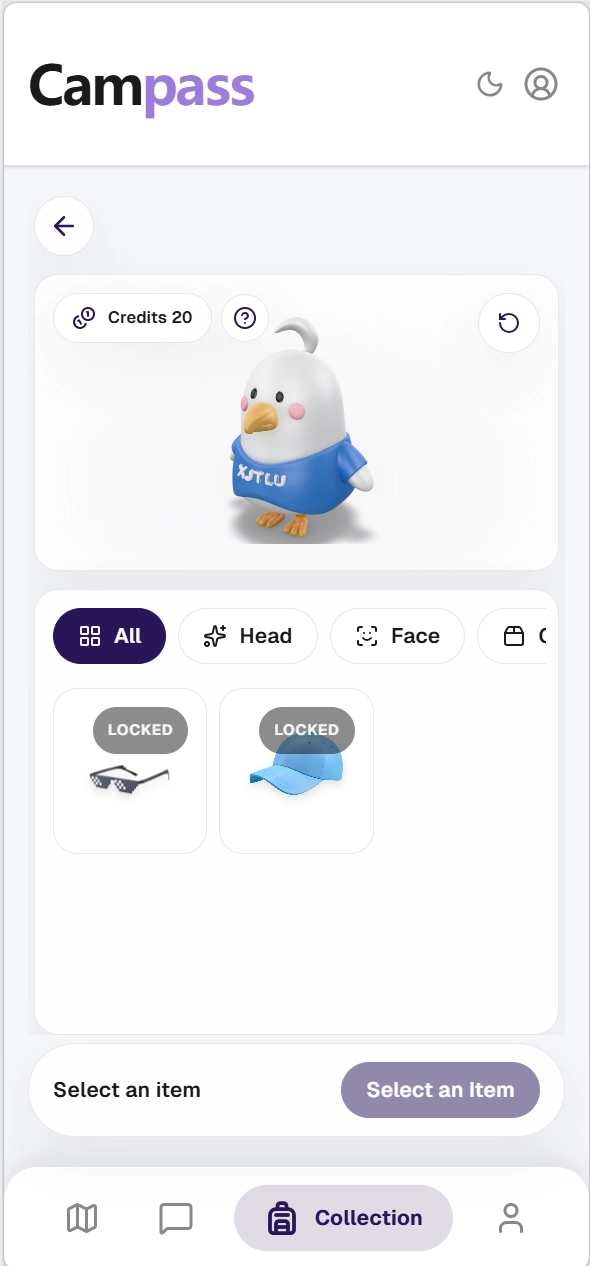
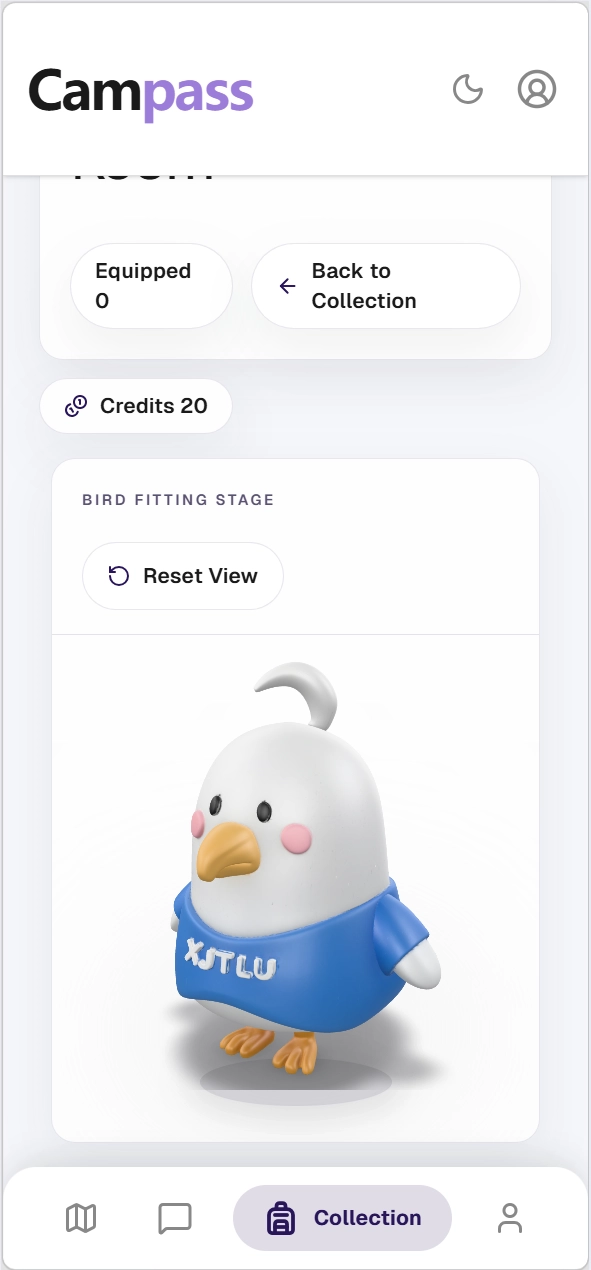
Solving Interaction Conflicts: Zone Separation & Action Bar
Technical Implementation
Interactive Zone Separation: We disabled full-page vertical scrolling. The top 3D canvas is designated exclusively for gesture-based rotation, while the bottom accessory list utilizes isolated local scrolling (overflow-y: auto).
Fixed Action Bar: High-frequency actions like 'Equip' and 'Buy' were extracted from individual item cards and centralized into a floating Fixed Action Bar at the bottom screen edge (the optimal Thumb-Zone for mobile users).
Feedback 3 - Context-Aware Gamification: The Adaptive Quiz Engine
The Gamification Post-Mortem
Cognitive Mismatch
A "one-size-fits-all" question bank alienated visitors with technical questions and bored seniors with trivial orientation tasks, disrupting the "Flow" state.
Lack of Personalization
The game felt generic and frustrating, failing to meet the distinct informational needs and cognitive goals of diverse stakeholders (Visitors vs. Students).
Architecture of Personalization: Adaptive Quiz Engine
Visitors
External StakeholdersCampus culture, history & landmark storytelling
Freshmen
The NovicesSurvival Hacks & navigating academic facilities
Seniors
The ExpertsHidden architectural details & design mastery
Persona-Driven Content: We implemented an Adaptive Quiz Engine that customizes the narrative: Visitors focus on culture/history, Freshmen on "Survival Hacks" and navigation, and Seniors on hidden architectural details for a sense of mastery.
HCI Rationale (Cognitive Fit): By applying Cognitive Fit, information matches the user's existing knowledge and immediate needs. This Context-Aware interaction shifts the app from a generic directory to a personalized guide, enhancing Inclusivity and long-term engagement.
Feedback 4 - Anti-spoiler Gamification Loop
The UX Post-Mortem
Immersion Breaking (Spoilers)
Displaying all hidden locations in the filter dropdown prematurely revealed secrets, breaking the sense of exploration and surprise.
Lack of Progression
Users had full visibility of the locations list without needing to discover the physical NFC tags first.
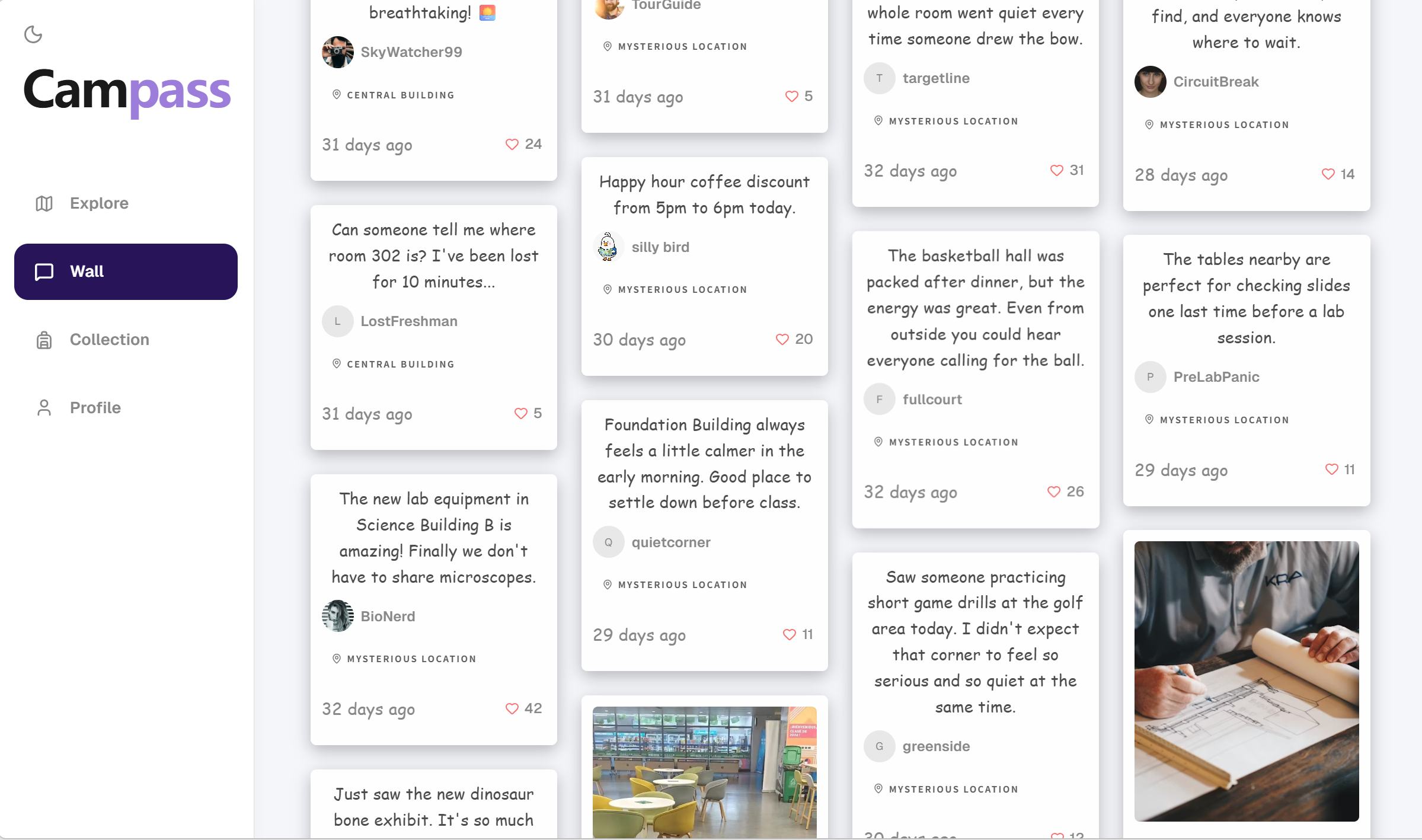
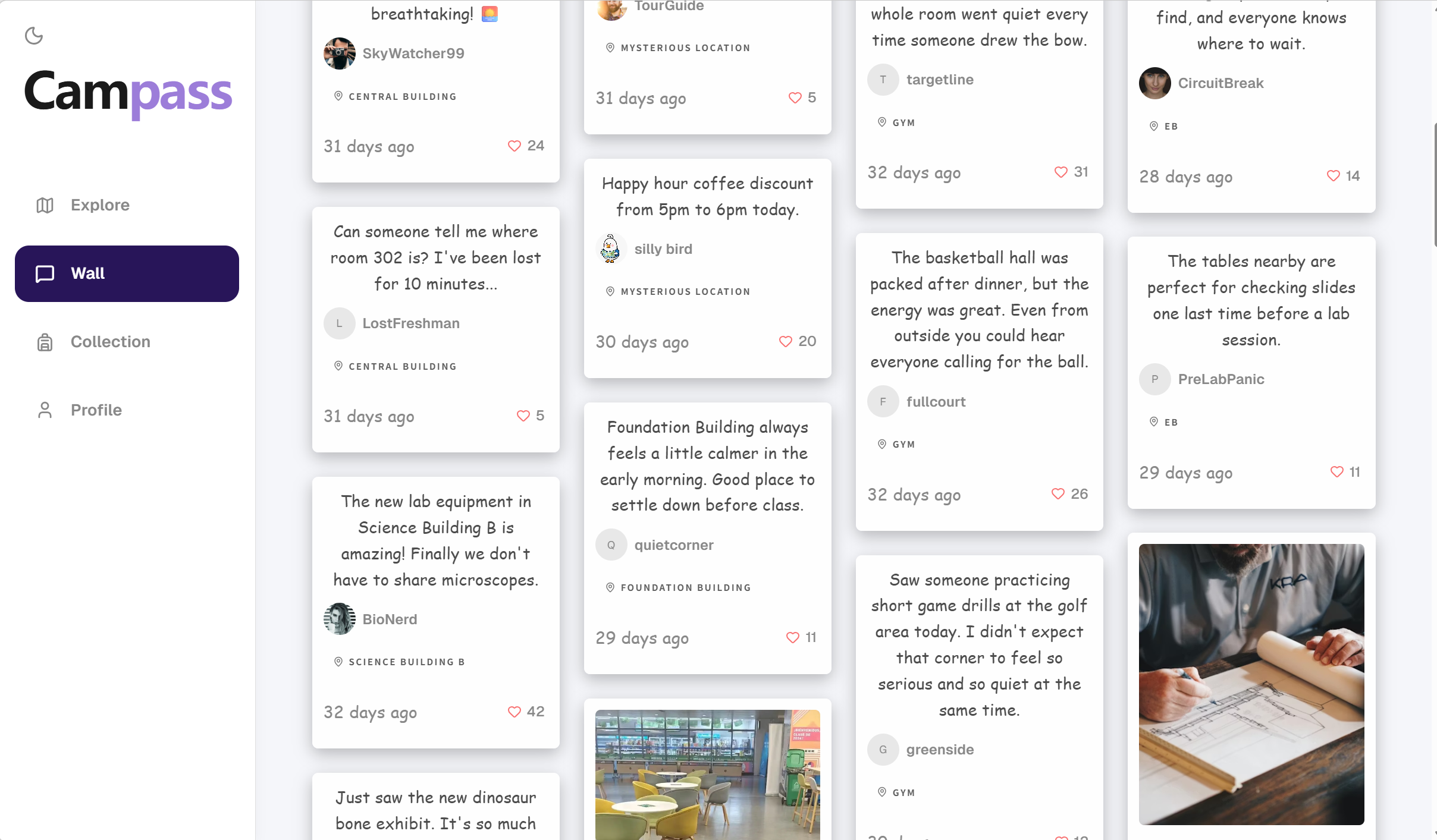
Solving Spoilers: Progressive Dynamic Filter
Technical Implementation
Progressive Dynamic Filter: We transitioned from a static list to a content-aware dynamic list. Unvisited locations on the message wall are masked as "Mysterious Location".
Unlock-Based Options: The filter dropdown now exclusively shows location options that the user has physically unlocked via NFC interactions, preserving the gamified exploration loop.